
Blending techniques for repainting
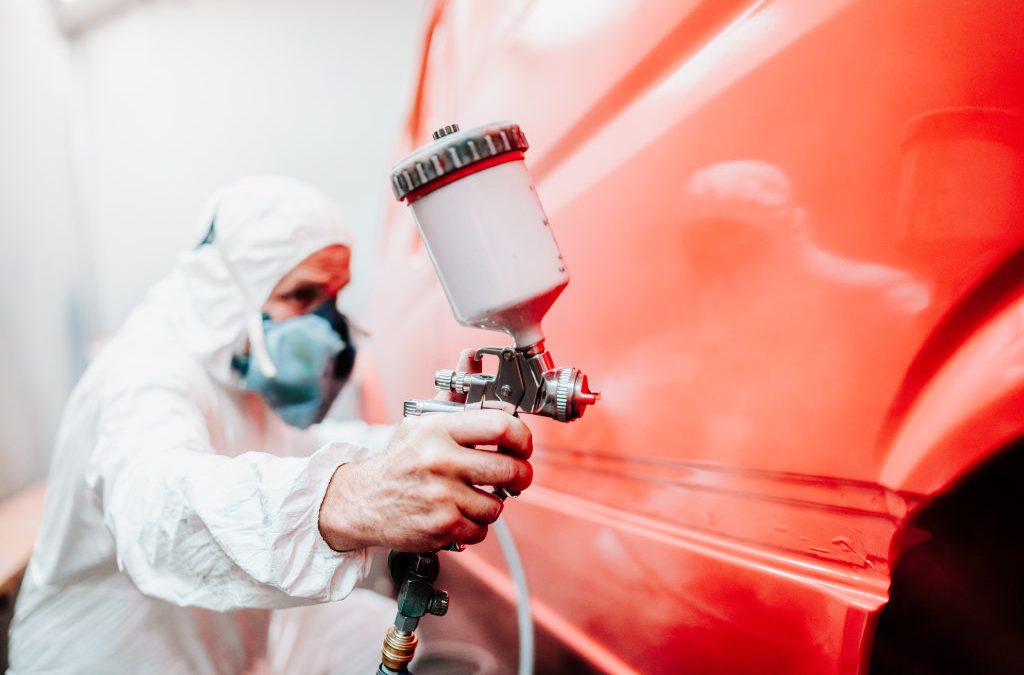
Blending techniques for repainting
To achieve an imperceptible repaint and avoid visible edges, there are several specific blending techniques that professionals use in the automotive industry:
Dry and wet blending
- Dry blending: The paint is applied gradually to the repaired area, gradually reducing the amount of paint toward the edges. It’s crucial to respect the drying time between coats to avoid streaks and achieve a smooth transition.
- Wet blending: A specific product (blender) is applied to the wet paint surface, helping to blend the new paint with the old. This technique is simpler but requires specific materials and is usually more expensive.
Controlled degradation
- Flow and Fan Reduction: When applying the first coat of color, gradually reduce the flow rate from the gun and adjust the fan to achieve a smooth, progressive transition, especially at the edges of the repaired area.
- Application in multiple directions: It is recommended to apply the paint in all directions along the patch boundary, avoiding concentrating the product in a single spot and promoting the integration of the transition.
Controlled sweep
- Sweeping from right to left or vice versa: A continuous movement of the paint gun is performed, covering the repaired area and extending towards the edges, which facilitates the creation of a natural gradient.
Layering and evaporation
- First layer on the damage: A layer is applied over the repaired area, extending slightly towards the edges.
- Second extended layer: After evaporation, a second, more extensive layer is applied, blending from the outside to the edges of the patch, to ensure a smooth transition.
- Control coat: Finally, a control coat is applied without reaching the edges of the adjacent piece.
Use of appropriate products
- Specific solvents and thinners: Suitable integrators and varnishes are used for each type of paint (single-coat, two-coat or three-coat), avoiding the use of common thinner to avoid damaging the surface.
- Varnish and final polish: After blending, varnish is applied to the repaired area and, once dry, it is polished to remove imperfections and improve the finish.
Summary of key techniques
- Dry blending: Apply paint gradually, reducing the amount towards the edges and respecting drying times.
- Wet Blending: Use a blender on wet paint to blend the transition.
- Controlled Fade: Reduce gun flow and fan for a smooth transition.
- Controlled Sweep: Continuous movement of the gun to create a natural gradient.
- Layers and Flashing: Apply multiple coats with flashing intervals to smooth the transition.
- Suitable products: Use solvents, varnishes and polishes specific for each type of paint.
These techniques ensure that the repair is virtually invisible, seamlessly integrating the new paint with the original and avoiding visible edges.
If you liked this post “Blending Techniques for Repainting,” you might also be interested in “Partial Repainting of a Car.”
If you want to keep up to date with our publications you can do it here and you will get a 5% discount on your first purchase.